
READ OUR BLOG


Shirani2.jpg

Having children, self-belief and acceptance

Written by Shirani Wright

Read part 1 of Shirani’s story.

Another thing that was very hard for me – and I’m sure turned out much better than the doctors thought – was having my children. I don’t think my rheumatologist was overly keen on the idea, but he knew me well enough, not to try and talk me about of it as he knew that nothing was going to stop me and nothing did!

I was advised that I had to come off my methotrexate for three months before we started trying to get pregnant. This is because it’s a category X drug for pregnancy and can cause serious birth defects, including spina bifida. This was a bit scary.

The doctors thought that, by coming off methotrexate, I might have a big flare-up and not be able to even get pregnant. I came off methotrexate and luckily for me, no flare-up. They also thought if I did get pregnant there were a lot of other possible complications that could have resulted in the baby being born early.

My doctors pretty much implied I was too sick to get pregnant and carry to full term. Well, you know what they could do with that idea!! Even if I had to sit in bed for nine months and not move, I was determined to have children and that’s what I did. I have two beautiful girls, Chloe and Jacinta. I’m not going to say it was always easy, but it was worth it. I feel extremely luckily to have my two healthy girls.

I’d like the all the parents of kids with arthritis, and children with arthritis, to know it’s possible to have children of your own if you want to, even if you do have arthritis.

Having arthritis does make looking after my girls difficult sometimes, but I wouldn’t have it any other way. I wasn’t about to let arthritis stop me from having children!!! It’s easier, now they are both at school. I’m also very lucky to have a very supportive husband who understands my health issues and does a lot with the children as well as working full time and supporting me emotionally.

I also get emotional support from my friends, and family, but I’ve found that the Young Women’s Arthritis Support Group has helped greatly, as everyone in the group knows what it’s like to be in pain, be on medication, have bad days and everything that goes along with having a chronic illness.

I believe having arthritis has made me a strong person mentally and that it has helped me develop a positive attitude towards life. It often hasn’t been easy but I’m not one to back down from a challenge. I sometimes wonder what I’d be like as a person if I didn’t have arthritis.

We all have our limitations whether we have a disability or not. There are those who might not be able to walk but they might be a terrific artist. People with a disability can have just as fulfilling a life as someone without one. We can do anything we set our mind to. It might just take a bit of extra work but we can do it.

If I can give any advice to children with arthritis I would say, we need to believe in ourselves. We need to accept that we have a disability and that we have limitations but we shouldn’t let our disability define who we are. We are more than our disability.

To leave you, I’ll finish with a thought. Never give up and always shoot for your dreams!


Shirani.jpg

Growing up, school and working

Written by Shirani Wright

I wake up in the early morning to go to the toilet. I look at the time – 5.00am – early enough to take my tablets. I turn on the lamp and automatically reach over and take my prednisolone, plus eight other tablets so they have time to work before I need to get up and get my girls ready for school. I go back to sleep until my alarm goes off at 6.50am and then I start my day.

Taking medication is a part of my life as I have systemic juvenile idiopathic arthritis. I was three and a half when it all began.

It started when I got bronchitis. My condition worsened and I was in hospital for six weeks. No one knew what was wrong with me. The doctors thought I had pneumonia, and although I was on IV antibiotics I just wasn’t getting better.

I was transferred to The Royal Children’s Hospital, where I had a number of investigations on my lungs and they discovered that I had a massive amount of inflammation. With this discovery and further tests, I finally had a diagnosis – systemic juvenile idiopathic arthritis or SJIA, an autoimmune condition that has stayed with me to this day. Not many people know that lung involvement, like I had, can be a part of some types of arthritis. And for me, joint involvement happened a bit later.

Since I was diagnosed at 3, I don’t remember not having arthritis. I think maybe this has made it easier for me than other people I’ve met who got arthritis at an older age, who might have been used to a certain life. I don’t remember what it’s like not to be in pain or discomfort every day or not to regularly go to the doctors, have tests, and be in hospital. It’s all just a part of my life and I’ve accepted it.

My twin sister and I had tennis lessons for a while but I remember I couldn’t run fast enough. I also did gymnastics too, so as you can see I didn’t let my arthritis stop me! My sister played basketball with a school friend for a time, I didn’t because of my arthritis. I don’t remember being particularly upset by this. I used to go and watch her team play and sometimes score for them.

At school, my arthritis didn’t affect me that much. I pretty much always joined in with PE unless I was having a particularly bad day. Sometimes if we had to walk somewhere from school my mum would organise for me to get driven by one of the teachers and I could always take a friend. Sometimes I’d be late getting to school if I was waiting for my tablets to work.

I felt like I had a bit of support from Musculoskeletal Australia growing up but not as much as there is available now. The Arthritis Foundation of Victoria (as it was known back then) ran camps during the summer holidays as a way for young people with arthritis to get together, meet each other etc. On these camps, they offered workshops run by doctors, massages and free time. It also gave us the chance to meet other young people with arthritis.

Up until those camps, I think I had only met one other child with arthritis; that’s why I think MSK Kids is a really great idea. It gives kids and young people an opportunity to meet each other and support each other. It also gives their parents the same thing. I’m sure my parents would have liked to have known some parents of kids with arthritis.

One thing I didn’t like about having to take medication for my arthritis is that because I’ve taken prednisolone since I was 3 (and I’m still on it 41 years later) it has stunted my growth. So when I was 15 years old, I looked 10 or younger, and that really used to bug me! I remember once I was in a shop with my mum and the shop assistant said, “are you mum’s little helper” and I got really upset. As my mum said though, it’s not her fault she doesn’t know. Now that I’m an adult, being short doesn’t worry me really from a social point of view, it’s more on a practical side when I sometimes have trouble reaching things at the supermarket, or glasses on shelves etc.

I think one thing that got me through childhood with arthritis,(apart from my mum)
is a positive attitude. Because I have arthritis there are things I can’t do. However, I try to concentrate on what I can do rather than what I can’t. This isn’t always easy, but I try and take the attitude that there’s no use worrying about what I can’t do, as that won’t change the situation. I try not to get grumpy or sad about it as this doesn’t change anything. It just gets me down and isn’t much fun for the people around me.

It’s not always easy to accept my limitations but I try and think “well everyone, including healthy people, has limitations”. Not everyone can run a marathon but does that mean they’re not as good as someone who can? I would say NO. Those people who can’t do one thing might be able to do something that another person can’t do. A fish can’t walk, but they’re happy.

One limitation I have had to deal with because of my arthritis is that I’m not working.

I left school and went to university and then TAFE. I worked in several part-time jobs over 10 years. I had to change fields of jobs from Nanning to reception/admin work as nannying was too physical. I did try working full-time for a year and a half but ended up in hospital as I often became breathless (which happens a lot with my type of arthritis).

At that stage, my doctor said I needed to cut my hours back. I found this hard as up until then my arthritis had not really limited me in a big way. But the fact that I couldn’t work full time was a big thing. It made me feel like I was sick and not normal.

One of my friends didn’t understand this. She said it was good that I only had to work part-time. What she didn’t understand was that working part-time wasn’t a choice! I didn’t choose it, I had to do it for health reasons. After some time and thought, I accepted this change and continued with my life. I no longer do any paid work as my health isn’t up to it.

Read part 2 of Shirani’s story.


fruit.jpg

Trying to eat well can seem daunting. Every day it seems a new diet hits the media, endorsed by a celebrity or twelve. And eating healthfully sounds expensive and like too much hard work.

So what can you do to make sense of it all, eat well, and stay on budget?

When it comes to working out what’s best for you and your family, it makes sense to go back to basics.

  • Plan your meals/snacks and write a list of the ingredients you need before you hit the shops. This is a must, because it’s easy to forget things, buy the wrong quantities or buy items you don’t need in the heat of the moment (hello Tim Tams 🙂 ).
  • Go generic. Check out the generic, home brand and no-name versions of your staples, such as flour, tinned tomatoes, legumes, oats. They’re generally cheaper and are often the exact same product as the name brand, just with less fancy packaging.
  • Read the nutrition panel on your foods. It’s a good habit to get into so that you can track the amount of energy (kilojoules), fat, salt, sugar etc in your foods. It’s also useful when you’re comparing different brands of the same product.
  • Swap a meat dish or two for a vegetarian meal. Research has found that a vegetarian diet costs less than a diet that includes meat. You don’t have to go all out vego, but simply swap a few of your meat dishes for plant-based meals. They’re tasty, healthy and cheap. Just make sure you do your research and use healthy recipes. You can find a lot of yummy recipes online.
  • Reduce your kitchen waste. Shopping with a list will help here, and also only buying what you need. Take note of the foods that you often throw out because you didn’t use them before they became an unidentifiable furry blob in your fridge. Avoid buying that item, or buy less of it when you shop. Or look for ways to use food that’s becoming slightly less than fresh, but is still good. Soups are a great way to use the last of the vegies in your fridge crisper. Also check out the Foodwise website. It has lots of tips to help you reduce waste, as well as recipes, meal plans, info on what’s in season and loads more.
  • Buy fresh fruit and vegetables that are local and in season. It’s cheaper, fresher, yummier and supports our local farmers. The Foodwise website can help you find what’s in season. They even have a seasonal meal planner. Very handy!
  • Grow your own. If you enjoy gardening, why not try growing some of your own produce? Whether it’s small scale with a few pots of herbs on your balcony or larger scale vegie patch and fruit trees in your backyard, you can experience the pleasure, and reap the rewards of growing some of your own foods.
  • Frozen and canned vegetables can often be used in place of fresh vegies. They’re still healthy and they’re often cheaper. They’ll also keep longer.
  • Read the unit price when comparing products. This will enable you to see the difference in price regardless of brand or quantity, and you can work out which provides the best value for money. Unit pricing works by using a standard measurement across all products of the same type. So for example, if you compared orange juice X with orange juice Y, orange juice X costs $5.25 for a 2 litre bottle, so its unit price is $2.63 per litre; orange juice Y costs $5.74 for a 1.5 litre bottle, so its unit price is $3.83 per litre. So orange juice X is cheaper per litre. Luckily, you don’t have to tie yourself up in knots doing this math when you’re shopping – the unit price is provided on the shelf label and online. Thank goodness! Shopping is hard enough!
  • Shop around. Just because you’ve always shopped at [insert shop of choice here] doesn’t mean you always have to shop there. Keep an eye on catalogues, visit the local farmers markets, join online groups with other savvy shoppers so you’re always in the know about who’s providing the best value for money for your groceries.
  • For items that last, and that you use regularly, buy in bulk. This includes things like rice, dried/canned legumes and pasta.
  • Finally, don’t shop when you’re hungry. It’s a really easy way to suddenly find lots of yummy, and unhealthy things in your basket, that weren’t on your shopping list. It’ll blow your budget and your plans for healthy eating right out of the water. So shop after you’ve eaten, or munch on an apple or banana or handful of nuts before you even consider walking into the bright lights and air-conditioned aisles of your local shopping centre. Your budget will thank you for it.

More to explore


Thalia-blog-photo-1.jpg

Written by Thalia Salt

My name’s Thalia and I’m twelve years old. I was diagnosed with osteoarthritis when I was five years old, which was caused by a joint infection in my left hip when I was ten months old. I like to sing and act, and I love hanging out with my friends after school.

Living with arthritis from such a young age is hard, but it has some advantages. I’ve been finding different ways to cope for my whole life, which means I have some quite effective strategies up my sleeve. But there are many things that aren’t so great. I learned to walk with arthritis, so my gait was awkward. I don’t know what it’s like to have no pain, and sometimes when I do have lots of pain my body tunes out of it until it’s unbearable.

The arthritis has also gotten in the way of my life outside of school activities. I have to sit down when I sing, and I’ve had to do several performances in my wheelchair. When I’m with my friends, we have to limit our activity accordingly. I haven’t been able to participate fully at school and have had to resort to a mobilised scooter in the past just to get around.

This story has a happy ending though. In June 2017, I had a total hip replacement. Since then, I‘ve been walking up to 3km, running, getting around school without my walking aids. I’ve also been swimming and riding my bicycle.

Something else that’s changed is the amount of medication I’m taking. Before, I was taking a large range of medications, including some very strong painkillers. Now I take hardly any medication. My personal lifestyle has also been greatly altered. I’ve been able to move around the house freely, participate in my outside of school activities like any other person, although I’m still not up to standing up for more than a few minutes. I’ve been discharged from the physiotherapist and have started to see a personal trainer.

In the future, I should be able to participate in P.E. at school, stand up for as long as I like, walk around my neighbourhood with my friends after school. I should have no pain, which is something that I’ve not experienced before. I can’t wait to go to the beach without my crutches and being able to do whatever I want when I get there, without worrying about the consequences.

My top 5 pain management tips

  1. Heat packs. Something that affected me a lot was the cold in the dead of winter. A heat pack when relaxing can often ease the pain, particularly when I go to sleep.
  2. Crutches. These help take the stress off your joints. Obviously this only works for pain in your legs.
  3. Reducing movement before a large amount of exercise. If I know that I’m going to participate in an activity that requires a lot of physical movement, I’ll take it easy for a few days, as if I’m “saving” the soreness for later.
  4. Not constantly being on all the meds. That way, when you’re in a lot of pain you have something you can take.
  5. Stretch constantly. I know that maintaining the right amount of exercising and protecting your joint is hard, but a large cause of pain is stiffness from not moving enough. So, you need to stretch. A lot.

Our guest blogger

Thalia is a positive ambassador for young people living with arthritis and chronic pain.

She’s worked tirelessly to raise the profile of arthritis in young people and how it affects them. She’s held fundraising events, received many awards, created a Facebook page, a vlog on YouTube about her surgery and much more.


2571-1200x800.jpg

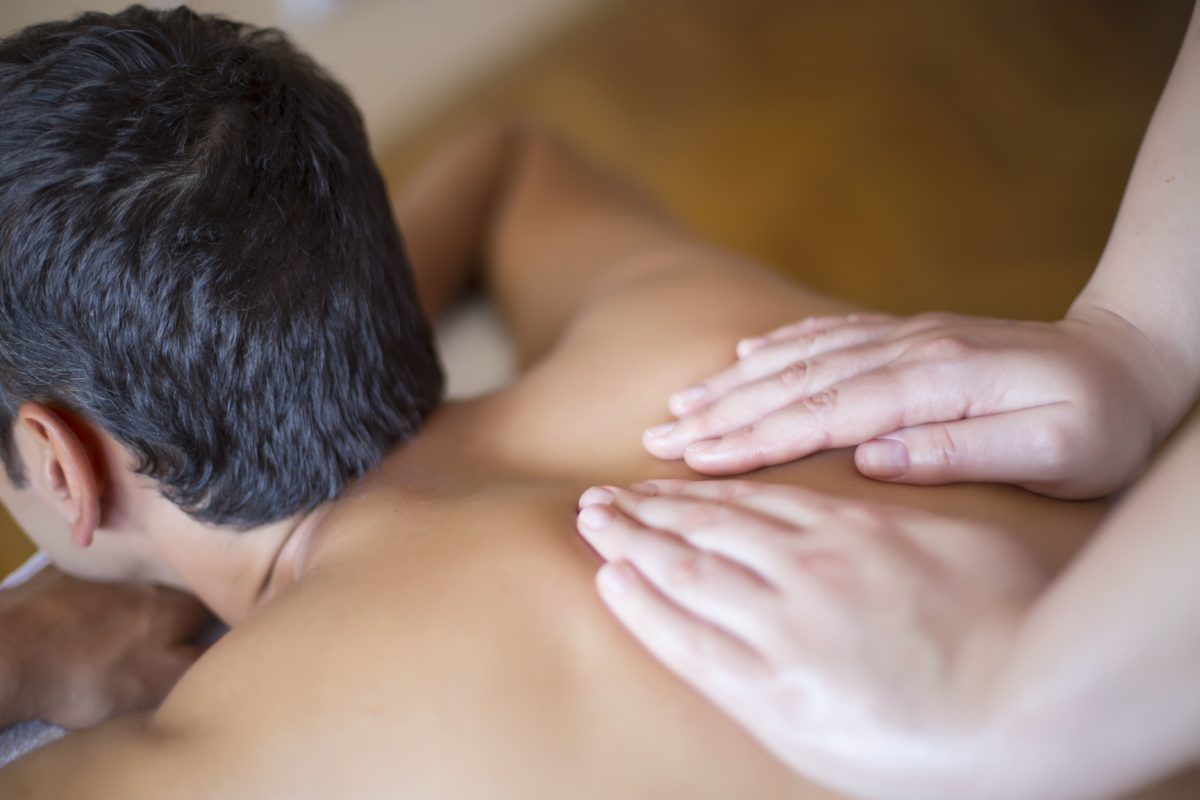
Have you had a massage lately? We often think of them as an indulgence, or something we get every now and again as a treat. However many people find that regular massages really helps them manage their pain.

Massage is a hands-on therapy that involves rubbing and manipulating the soft tissues of your body, especially your muscles. It can improve blood circulation, ease muscle tension and help you feel more relaxed. A massage can also help relieve stress and help you sleep.

You can relieve many of your own muscular aches and tension by giving yourself a massage. You may even find that you do it unconsciously – when you’re sitting at the computer and you rub your neck, when you have a headache and you gently rub your temples, or when you’re applying a heat rub to your sore knee.

Self-massage tips

Warm up first – ease some of your muscle tension with a warm shower or applying a heat pack (warm not hot) to the painful area.

Use smooth, firm strokes. You’ll feel the difference between strokes that are relieving muscle tension, and those that are adding to it. Adjust the pressure, from hard to gentle, based on your pain.

Add some massage oil (or lotion) – it can help your hands move smoothly over the skin, however, they aren’t essential; it’s a personal choice.

Use massage aids – you can use a foam roller, massage balls or other massage aids; e.g. use a tennis ball or a golf ball to massage the soles of the feet. Simply place the ball on the floor, place your bare foot on top of it and gently roll the ball along the length of your foot. If you’re unsteady on your feet, sit down while you do this. You can also use the shower to provide a massage, especially on your neck, shoulders and back.

Do it regularly – to prevent muscle pain and tension building up.

See a qualified massage therapist –they’ve been trained to know how your body works, how to relieve muscle tension and how to help relieve your pain. They can also get to the hard to reach places, and give you tips and advice on your self-massage techniques.

Massage is a fantastic and simple way to relieve muscle aches and pains. And when you give yourself a massage, you can do it almost anywhere, and it’s free! Try it next time you feel tense and sore.


musculoskeletal health australia

Musculoskeletal Health Australia (or MHA) is the consumer organisation working with, and advocating on behalf of, people with arthritis, osteoporosis, back pain, gout and over 150 other musculoskeletal conditions.

Useful Links


Recent Posts

Copyright by Musculoskeletal Health Australia 2026. All rights reserved

ABN: 31 607 996 921ACN: 607 996 921